Beyond the Cover #1
Lynn Swann — The Catch That Became Legend
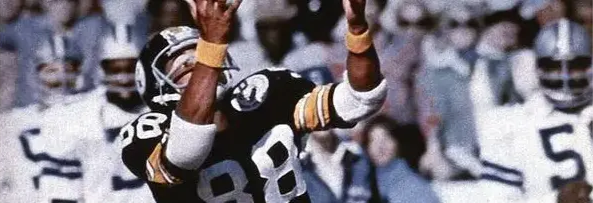
On January 18, 1976, Lynn Swann took the field at the Orange Bowl carrying more than expectation. Two weeks earlier, in the AFC Championship Game against Oakland, Swann had suffered a severe concussion—hospitalized, sidelined from practice, and very much in doubt for the Super Bowl. In an era before modern concussion protocols, his status wasn’t about clearance. It was about resolve.
That context matters, because what followed wasn’t just a performance—it was a return.
The Game
Super Bowl X unfolded during America’s Bicentennial year, wrapped in red-white-and-blue pageantry and watched by the largest television audience the NFL had ever seen. On the field, Pittsburgh’s Steel Curtain defense and Dallas’s Doomsday Defense collided in a bruising, low-margin chess match—two historically great units daring the other to blink first, with Pittsburgh recording a then-Super Bowl-record seven sacks to tip the balance.
The Catch That Became the Image
Midway through the second quarter, Terry Bradshaw dropped back and launched a deep ball downfield. Swann elevated, fully extended, and secured a 53-yard reception that seemed to suspend time itself. That moment—Swann arched in midair, hands meeting the ball—would later become the January 26, 1976 Sports Illustrated cover, and Swann's first cover appearance for that magazine.
Swann finished the game with 161 receiving yards and became the first wide receiver ever named Super Bowl MVP, a distinction that reflected not just production, but presence. He later sealed the win with a 64-yard fourth-quarter touchdown, a strike that defined both the outcome and the legacy of Super Bowl X. Bradshaw absorbed a brutal hit on the throw and left the game with a concussion, never to return—leaving Swann’s performance as the final, decisive statement of the night.
Confidence After Injury
“My big catches that day are what people remember… but in coming back from my concussion, my biggest catch occurred on the first pass that Terry threw to me. I went up for a high, graceful reception that gave me the confidence I needed to make the other catches later on.”
— Swann on Super Bowl X .
The Photographer’s Moment
The iconic Sports Illustrated cover that immortalized Swann’s leap was captured by Heinz Kluetmeier, one of the magazine’s most celebrated photographers. Kluetmeier would go on to shoot more than 100 SI covers and dozens of Olympic Games over his storied career, making him one of the most influential sports photojournalists of the 20th century. His ability to distill peak athletic moments into single, powerful frames gave the world many of its most enduring sports images — from the Miracle on Ice to this split-second capture of Swann’s athletic grace.
What Swann Said, Years Later
When Swann was inducted into the Pro Football Hall of Fame in 2001, he spoke less about individual greatness and more about patience and shared success. He acknowledged the long wait to get inducted, calling it difficult but meaningful, and emphasized that no individual moment exists without the team that creates it. The honor, he said, wasn’t earned overnight, it required consistency, trust, and timing. Those same qualities live inside that photograph.
Why the Cover Endures
In the decades since Super Bowl X, that Sports Illustrated image has lived on as more than a record — it’s a narrative shorthand for excellence in motion. Thanks to Heinz Kluetmeier’s lens, Swann’s grace at the peak of his arc became not just a photo, but an emblem of athletic possibility.
For those who cherish the fine line between athletic artistry and cinematic sports storytelling, that leap remains enduring — not just a catch, but a moment where preparation, performance, and sheer human expression collided in the sunlit air above Miami’s Orange Bowl.